
Climate Action, Drought Management, Livelihoods & Resilience
Building Climate-Resilient Pastoralist Communities in Shurr Conservancy
The project aims to strengthen climate resilience and sustainable livelihoods among the Shur community in Shurr Conservancy, Marsabit County, through community-led natural resource management, climate justice, pastoralist rights, and gender inclusion.
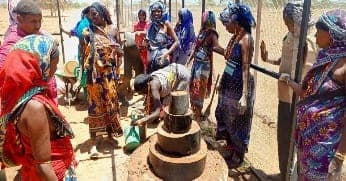
Shurr Conservancy Climate Smart Farm
1 / 26
Description
Project Title: Catalysing and amplifying the collective community voices to secure their rights to natural resources, livelihoods, and the conservation of the natural heritage, and to adapt to the inevitable climatic changes in the most beneficial manner.
Sector: Strengthen community resilience to climate change impacts, improve Livelihoods (Food Security) and Disaster risk reduction
Target Group: Members of Shur conservancy- conservancy management, community landowners who women, youths, elders, PLWDs and minorities.
Target Groups
The project focuses on conservancy as a means for community climate adaptation and biodiversity conservation. It aims to support around 500 households in Shur conservancy, equivalent to 3,000 community members, through nature-based enterprise and climate smart agriculture approaches. The project indirectly supports about 10,000 people, with a focus on women-headed households as well, who will benefit from drylands smart agriculture, including kitchen gardening, dairy goats, and poultry rearing, to build resilience and adapt to climate change effects.
The summary of target groups is as underlisted:
- Council of Elders.
- Groups of women, youth, self-help
- Interested pastoral groups in the region and across Turbi ward.
- Minorities
- Conservancy members and board of directors
- Custodians of traditional institutions
- CSOs and CBOs
- Special interest groups PLWD
The urgent problem of climate change calls for scalable solutions. Building mutual capacity which entails several stakeholders cooperating to create specialized, long-lasting solutions. This strategy acknowledges that no one institution can resolve the issue on its own and calls for strong leadership, frank communication, and a dedication to common objectives. It is important to provide stakeholders the freedom to share their special expertise and experiences to help shape potential solutions. Communities can actively participate in developing their own plans for resiliency against climate change by co-creating alternative climate solutions. Green spaces, public health, and coping mechanisms are all enhanced by supporting sustainable land use, protecting natural ecosystems, and funding sustainable enterprises.
Project Goal
The project aims to strengthen climate resilience and sustainable livelihoods among the Shur community in Shurr Conservancy, Marsabit County, through community-led natural resource management, climate justice, pastoralist rights, and gender inclusion.
The initiative will empower conservancy board members, traditional leaders, and community members through capacity building in advocacy, climate policies, resource mobilization, and climate-smart agriculture. Drawing on indigenous knowledge and conservation practices, the project will promote sustainable farming and nature-based enterprises to diversify livelihoods and strengthen the community’s economic independence.
Through experiential learning and exchange visits to model dryland farms, the community will acquire practical skills and knowledge to adapt to climate change. The project will also foster collaboration among county government, civil society organizations, development partners, researchers, and other stakeholders to mobilize resources and implement locally appropriate climate solutions.
Gender equality and social justice will remain central to the initiative, with a focus on strengthening women’s participation in decision-making and protecting the rights of women, girls, and other vulnerable groups affected by climate change. Ultimately, the project seeks to build an inclusive, self-reliant, and climate-resilient community while safeguarding natural resources for future generations.
Project Objectives, Activities and Expected Outcomes
1. Climate Finance and Community Advocacy
Strengthen the capacity of Shurr community leaders and members to access climate finance, influence county climate policies, mobilize resources, and promote inclusive climate action through training, advocacy, and stakeholder engagement. Expected outcomes include increased climate financing, stronger partnerships, and greater community participation in decision-making.
2. Climate-Smart Agriculture and Sustainable Livelihoods
Promote climate-smart agriculture in Shurr Conservancy through technical support, practical training, learning visits, and the development of farm infrastructure. Expected outcomes include increased adoption of sustainable farming practices, improved food security, and diversified household incomes.
3. Environmental Conservation and Local Enterprises
Empower 60 indigenous women and youth from the Shurr community through the Urbisa environmental movement, poultry keeping, kitchen gardens, and acacia seed conservation. Support 30 vulnerable Shur households with energy-saving cooking stoves. Expected outcomes include improved livelihoods, environmental restoration, and reduced household energy costs.
Overall Impact: Build a climate-resilient, inclusive, and economically empowered Shur community through improved access to climate finance, sustainable agriculture, environmental conservation, and diversified livelihoods.